


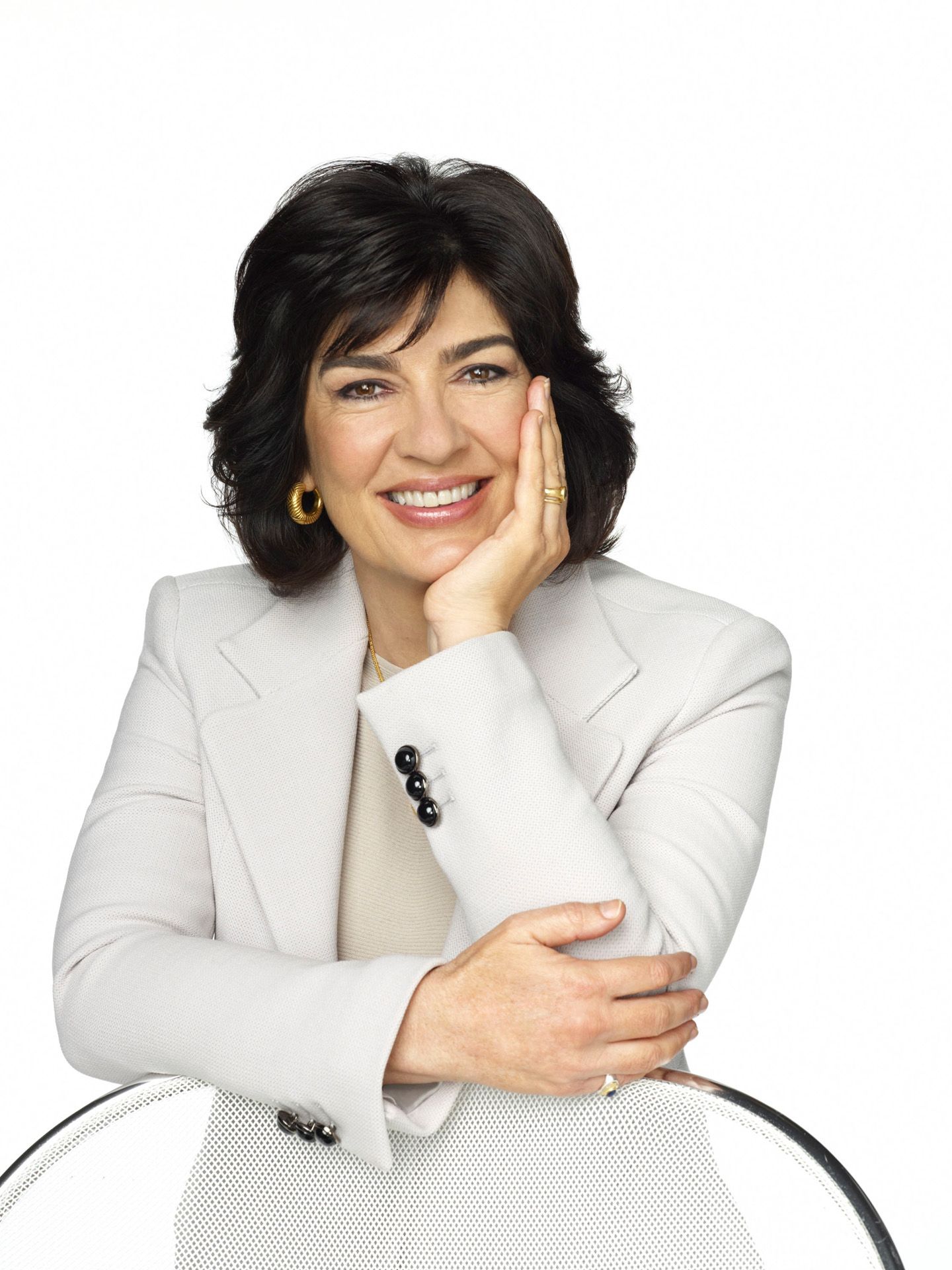
She was 11 when her family moved to Tehran. At 21, revolution forced her to flee. She started as CNN’s coffee girl in 1983. Today, she’s confronted more dictators on camera than any journalist alive.
London.
Christiane Amanpour was born into a bicultural family—Iranian father working in aviation, British mother. Two passports, two languages, two worlds from the start.
When Christiane was 11, the family relocated to Tehran. This was 1969—Iran under Shah Mohammad Reza Pahlavi, a modernizing autocracy aligned with the West.
For a child from London, Tehran was exotic but comfortable. International schools. English-speaking communities. A cosmopolitan upper-middle-class existence.
Christiane assumed this was permanent.
1979 proved otherwise.
Revolution swept Iran. The Shah’s regime collapsed. Ayatollah Khomeini returned from exile, transforming the country from secular monarchy to Islamic theocracy practically overnight.
Christiane was studying abroad in the United States when her family’s world imploded. Her father’s career evaporated. Their comfortable life disappeared. Returning to Iran became impossible.
At 21, Christiane went from privileged international student to refugee navigating an uncertain future with no family safety net.
She finished her journalism degree at University of Rhode Island in 1983, then faced the reality every journalism graduate faces: hundreds of applicants, few positions, brutal competition.
After countless rejections, CNN—then a scrappy three-year-old network trying to compete against established broadcasters—hired her for an entry-level desk job in Atlanta.
Not reporting. Not producing. Administrative work. The journalism equivalent of paying dues.
But Christiane had two advantages: fluency in Farsi and willingness to work harder than anyone else around her.
CNN transferred her to Frankfurt, betting her language skills might eventually prove useful covering the Middle East.
That bet paid off in 1990.
When Saddam Hussein invaded Kuwait, CNN needed correspondents who understood the region, spoke the languages, and could operate in chaotic war zones.
Christiane deployed to the Gulf and reported from actual conflict areas while competitors broadcast from hotel ballrooms and Pentagon briefings.
The coverage made her reputation. But it was Bosnia that made her philosophy.
1992-1995. Yugoslavia’s disintegration produced Europe’s bloodiest conflict since 1945. Sarajevo was under siege. Srebrenica became synonymous with massacre. Ethnic cleansing wasn’t metaphor—it was policy.
Western media covered the war inconsistently, often treating it as complicated tribal conflict rather than systematic genocide.
Christiane embedded in Bosnia for years, not months. She reported from besieged cities, refugee camps, and massacre sites. Her coverage was visceral—showing bodies, interviewing survivors, demanding Western leaders explain their inaction.
Traditional journalism doctrine demanded “both sides” treatment. Christiane rejected that framework entirely.
“Some situations you cannot be neutral about,” she argued. “Neutrality between aggressor and victim is complicity.”
This wasn’t opinion journalism. It was moral clarity about documented facts: who was being killed, who was doing the killing, and who was watching it happen.
Critics called it advocacy. Christiane called it journalism’s actual job.
That approach became her signature for three decades.
She reported from Rwanda during the 1994 genocide—not from Nairobi hotels but from killing sites.
She covered Afghanistan after 2001, Iraq’s invasion and occupation, the Arab Spring revolutions, Syria’s civil war.
Everywhere she went, she asked the uncomfortable questions most journalists avoided.
When she interviewed Yasser Arafat, she pushed him on suicide bombings—not gently, not diplomatically.
When she sat across from Muammar Gaddafi, she asked directly about Lockerbie, about terrorism, about political prisoners.
She confronted Iran’s Mahmoud Ahmadinejad about nuclear weapons programs and crackdowns on protesters.
She interviewed Syria’s Bashar al-Assad while his forces were barrel-bombing civilians, asking him to explain targeting hospitals and schools.
These weren’t conversations—they were confrontations. Polite in tone, brutal in substance.
Male journalists conducting identical interviews were praised for toughness. Christiane was consistently criticized as “too aggressive,” “too emotional,” “unable to maintain professional distance.”
The double standard was obvious. She ignored it.
2018 brought a different kind of battle.
Ovarian cancer diagnosis. Surgery. Chemotherapy. The kind of health crisis that forces most people to step back from demanding careers.
Christiane went public with her diagnosis, used her platform to advocate for cancer screening, underwent treatment, and kept working throughout.
She beat it.
Today, at 67, Christiane Amanpour remains CNN’s Chief International Anchor. She hosts programs on CNN International and PBS. She’s still conducting the interviews nobody else can—or will—do.
Her awards fill entire rooms: Emmys, Peabody Awards, honors from journalism organizations worldwide.
But awards aren’t why her career matters.
What matters: she fundamentally changed international journalism’s approach to conflict.
Before Christiane, “objective” war reporting meant presenting government statements without challenge, treating all sides as equally credible, avoiding moral judgments.
After Christiane, journalism recognized that documenting atrocity isn’t bias—it’s responsibility. That challenging power isn’t advocacy—it’s journalism’s core function.
She proved you could be Iranian-British, female, and foreign-born and still become the voice demanding answers from the world’s most dangerous leaders.
She demonstrated that showing suffering doesn’t compromise journalistic integrity—pretending to be neutral about genocide does.
Every journalist who reports honestly from conflict zones, every correspondent who challenges official narratives, every interviewer who refuses to accept evasive answers owes something to Christiane’s four-decade insistence that journalism’s job is witnessing truth, not maintaining comfortable fictions.
She was the coffee girl in 1983.
She’s the journalist dictators fear most in 2026.
That’s not luck. That’s refusing to look away, refusing to soften questions, and refusing to accept “no comment” from people with blood on their hands.
COPIED

