


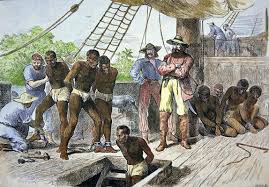
UN votes to recognise enslavement of Africans as ‘gravest crime against humanity’
The United Nations General Assembly has voted to recognise the enslavement of Africans during the transatlantic slave trade as “the gravest crime against humanity”, a move advocates hope will pave the way for healing and justice.
The resolution – proposed by Ghana – called for this designation, while also urging UN member states to consider apologising for the slave trade and contributing to a reparations fund. It does not mention a specific amount of money.
The proposal was adopted with 123 votes in favour and three against – the United States, Israel and Argentina.
Fifty-two countries abstained, including the United Kingdom and European Union member states.
Countries like the UK have long rejected calls to pay reparations, saying today’s institutions cannot be held responsible for past wrongs.
Unlike UN Security Council resolutions, those from the General Assembly are not legally binding, though they carry the weight of global opinion.
“Let it be recorded that when history beckoned, we did what was right for the memory of the millions who suffered the indignity of the slave trade and those who continue to suffer racial discrimination,” Ghana’s President John Mahama told the assembly ahead of the vote.
”The adoption of this resolution serves as a safeguard against forgetting. It also challenges the enduring scars of slavery,” he said.
Earlier, his foreign minister, Samuel Okudzeto Ablakwa, told the BBC’s Newsday programme: “We are demanding compensation – and let us be clear, African leaders are not asking for money for themselves.
“We want justice for the victims and causes to be supported, educational and endowment funds, skills training funds.”
The campaign for reparations has gained significant momentum in recent years – “reparatory justice” was the African Union’s official theme for 2025 and Commonwealth leaders have jointly called for dialogue on the matter.
Ablakwa also said that, with the resolution, Ghana was not ranking its pain above anyone else’s, but simply documenting a historical fact.
Between 1500 and 1800, around 12-15 million people were captured in Africa and taken to the Americas where they were forced to work as slaves. It is estimated that over two million people died on the journey.
What form could reparations for slavery take?
Confronting my family’s slave-owning past
The resolution, backed by the African Union and the Caribbean Community, states that the consequences of slavery persist in the form of racial inequalities and underdevelopment “affecting Africans and people of African descent in all parts of the world”.
Ablakwa told the BBC: “Many generations continue to suffer the exclusion, the racism because of the transatlantic slave trade which has left millions separated from the continent and impoverished.”
Ahead of the vote, speaker after speaker expressed similar views.
The UK, one of the major powers involved in the transatlantic slave trade, said it recognised the untold harm and misery that had been caused to millions of people over many decades.
But its ambassador to the UN, James Kariuki, told the assembly in his speech that the resolution was problematic in terms of its wording and international law.
“No single set of atrocities should be regarded as more or less significant than another,” he said.
The US’s ambassador to the UN made similar points during his speech, saying his country “does not recognise a legal right to reparations for historical wrongs that were not illegal under international law at the time they occurred”.
In addition, Dan Negrea said the US objected to the “cynical usage of historical wrongs as a leverage point to reallocate modern resources to people and nations who are distantly related to the historical victims”.
Ghana, one of the main gateways for the transatlantic slave trade, has long been a leading advocate for reparations.
Forts, where tens of thousands of enslaved Africans were once held under inhuman conditions, remain standing along the West African country’s coast.
As well as the “legal problems” around reparations, the US ambassador said the resolution was unclear as “to whom the recipients of ‘reparatory justice’ would be”.
Negrea also responded to Mahama’s earlier criticism of Donald Trump’s administration for “normalising the erasure of black history”.
Since returning to power, the US president has targeted American cultural and historical institutions for promoting what he calls “anti-American ideology”.
Trump’s orders have led to moves such as the restoration of Confederate statues and an attempt to dismantle a slavery exhibit in Philadelphia.
“These policies are becoming a template for other governments as well as some private institutions,” Mahama had said on Tuesday.
But Negrea said President Trump had done “more for black Americans than any other president”.
“He is working around the clock to deliver for them and make our country greater than ever,” he said.
The resolution also calls for cultural artefacts stolen during the colonial era to be returned to their countries of origin.
“We want a return of all those looted artefacts, which represent our heritage, our culture and our spiritual significance,” Ablakwa said.
“All those artefacts looted for many centuries into the colonial era ought to be returned.”
Results following the vote in the General Assembly on the resolution declaring the Trafficking of Enslaved Africans and the Racialised Chattel Enslavement of Africans as the Gravest Crime Against Humanity.
25 March 2026 UN Affairs
Applause erupted in the UN General Assembly Hall on Wednesday as Member States adopted a resolution declaring the transatlantic slave trade the gravest crime against humanity.
The resolution spearheaded by Ghana received 123 votes in favour. Three countries – Argentina, Israel and the United States – voted against and 52 abstained.
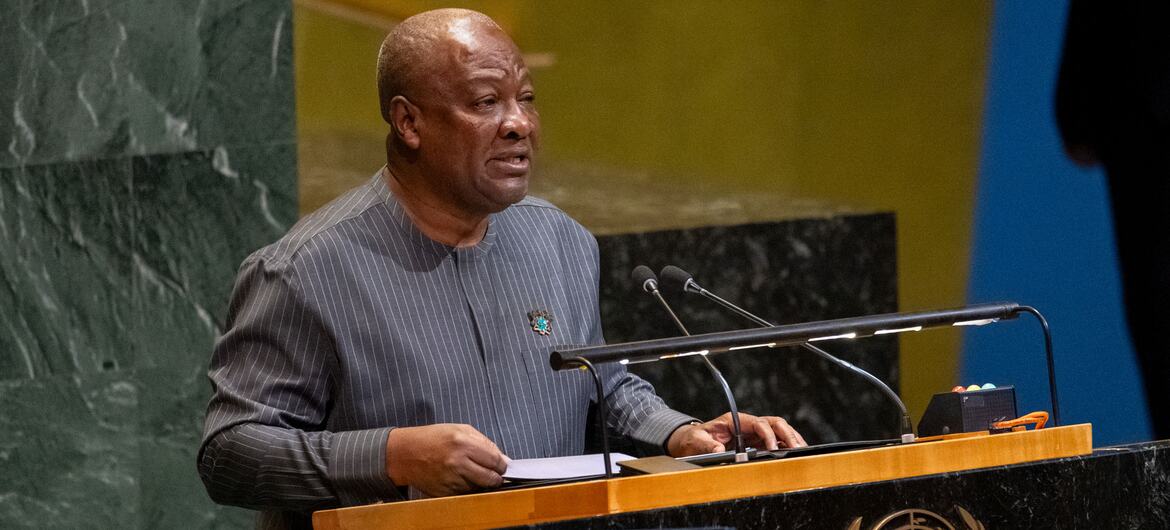
“Today, we come together in solemn solidarity to affirm truth and pursue a route to healing and reparative justice,” said Ghana’s President John Dramani Mahama, speaking ahead of the vote on behalf of the 54-member African Group – the largest regional bloc at the UN.
UN Photo/Manuel Elías
President John Mahama of Ghana addresses the UN General Assembly on the International Day of Remembrance of Victims of Slavery and Transatlantic Slave Trade.
Stolen, shackled, shipped
For more than 400 years, millions of people were stolen from Africa, put in shackles and shipped to the New World to toil in cotton fields and sugar and coffee plantations under scorching heat and the crack of the whip.
Denied their basic humanity and even their own names, they were forced to endure generations of exploitation with repercussions that reverberate today including persistent anti-Black racism and discrimination.
The resolution emphasised “the trafficking of enslaved Africans and racialised chattel enslavement of Africans as the gravest crime against humanity by reason of the definitive break in world history, scale, duration, systemic nature, brutality and enduring consequences that continue to structure the lives of all people through racialized regimes of labour, property and capital.”
There are spirits of the victims of slavery present in this room at this moment, and they are listening for one word only: justice.
Esther Philips, First Poet Laureate of Barbados
UN News/Elizabeth Scaffidi
A slavery memorial in Stone Town, Zanzibar, United Republic of Tanzania.
Address wrongs, support reparations
It affirmed the importance of addressing historical wrongs affecting Africans and people of the diaspora in a manner that promotes justice, human rights, dignity and healing, while emphasising that claims for reparations represent a concrete step towards remedy.
The text was “highly problematic in countless respects,” Ambassador Dan Negrea, US representative to the UN Economic and Social Council (ECOSOC), said prior to the vote.
He regretted that Washington “must once again remind this body that the United Nations exists to maintain international peace and security” and “was not founded to advance narrow specific interests and agendas, to establish niche International Days, or to create new costly meeting and reporting mandates.”
Furthermore, the US “does not recognise a legal right to reparations for historical wrongs that were not illegal under international law at the time they occurred.”
A grave human rights violation
The horrors of slavery echoed in the General Assembly Hall as Member States commemorated the International Day to remember its victims.
“The slave trade and slavery stand among the gravest violations of human rights in human history – an affront to the very principles enshrined in the Charter of our United Nations and the Universal Declaration of Human Rights, themselves born, in part, from these injustices of the past,” said Assembly President Annalena Baerbock.
The countries where enslaved Africans were taken from also suffered “a hollowing out” having lost entire generations who potentially could have helped them to prosper.
“It was, to put it in colder terms, mass resource extraction,” she said.
Remove persistent barriers
UN Secretary-General António Guterres called for confronting slavery’s lasting legacies of inequality and racism.
“Now we must remove the persistent barriers that prevent so many people of African descent from exercising their rights and realising their potential,” he said.
“We must commit — fully and without hesitation — to human rights, equality, and the inherent worth of every person.”
In this regard, the Second International Decade for People of African Descent and the African Union’s Decade of Reparations are significant.
Respect for African countries
He urged countries to use them to drive action to eradicate systemic racism, ensure reparatory justice and accelerate inclusive development, marked by equal access to education, health, employment, housing, and a safe environment.
“But far bolder actions — by many more States — are needed,” he added.
“This includes commitments to respect African countries’ ownership of their own natural resources. And steps to ensure their equal participation and influence in the global financial architecture and the UN Security Council.”
No peace without reparatory justice
The Poet Laureate of Barbados, Esther Philips, read from some of her works including a piece about a young girl walking on the grounds of a former sugar plantation and not understanding its historical significance as her ancestors buried there look on.
“There are spirits of the victims of slavery present in this room at this moment, and they are listening for one word only: justice,” Ms. Philips told delegates.
“Because for them and for the world, there can be no peace without justice –reparatory justice – and that call is answered only when words are turned into action. The question is, what will you do?”

