


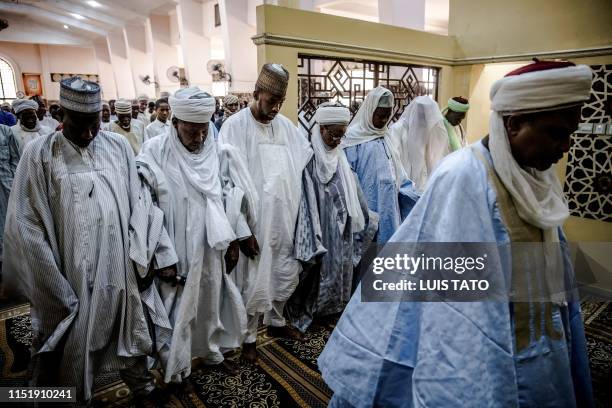
In a bold declaration that could shake the foundations of religious authority in Nigeria, the Chief Imam of Ibadanland and the League of Imams in Yorubaland have asserted their authority over the commencement of Ramadan in the Southwest, rejecting the Sultan of Sokoto’s role in determining the start of the holy month for Yoruba Muslims.
The announcement comes as the Southwest aligns with its indigenous religious leadership, stating unequivocally that the Sultan, a traditional leader of Sokoto state, holds no religious dominion over the Yoruba region. According to Muslim leaders in the Southwest, the Fulani Caliphate, which was established in 1804, had no influence in bringing Islam to the Yoruba people.
Islam was introduced to Yoruba lands long before the creation of the Sokoto Caliphate, and the political control of the Caliphate lasted less than a century, ending with the British colonial conquest. Therefore, the claim that the Sultan of Sokoto represents all Muslims in Nigeria holds no ground in the eyes of Yoruba Muslims.
Noting the Sultan’s traditional, not constitutional, status, the leaders argued that nowhere in the legal documents of the Nigerian state is the Sultan officially recognized as the “Sultan of Muslims.” This reinforces their position that his authority remains confined to his traditional role in Sokoto and does not extend to the diverse Muslim communities in the Southwest.
“We, as Yoruba Muslims, are not religiously bound to submit to the authority of the Sultan,” the statement read. “Religious leadership should encompass more than ceremonial duties like announcing the moon sighting. It should include moral integrity, the courage to stand against injustice, and the advocacy for victims, irrespective of their ethnic background.”
The Yoruba Muslim community has long held that no single ethnic group should dominate religious leadership in a multi-ethnic Muslim society, advocating instead for a more inclusive and representative form of leadership. Their message is clear: religious leadership in the Southwest should reflect the rich, independent Islamic heritage of the region, led by capable, God-fearing leaders who are grounded in faith and morality, not merely traditional political authority.
The decision to align with local leadership over the Sultan’s directive signals a defining moment in the ongoing evolution of Islamic authority in Nigeria’s diverse Muslim landscape.

