


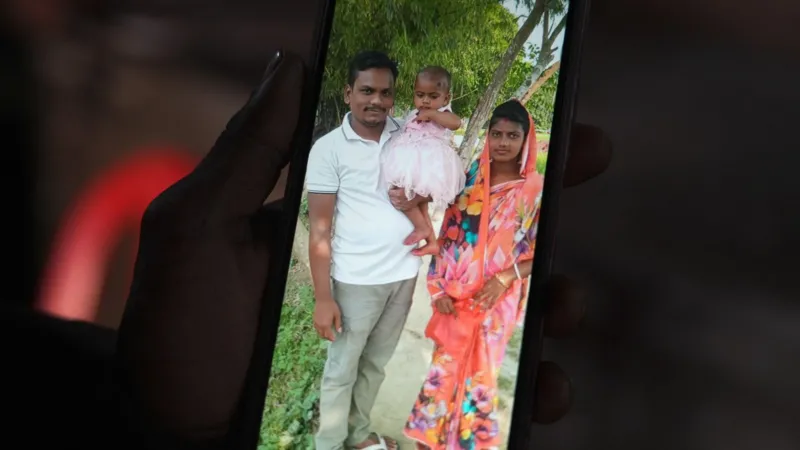
The morning before he died, Dipu Chandra Das left home at first light, stepping out of his tin-sheet house in Bangladesh’s Mymensingh city, overlooking a warren of lanes off the highway from Dhaka.
The 28-year-old woke up his father, said goodbye to his wife, cradled his 18-month-old daughter. Then he boarded a bus for the 60km (37-mile) journey to the garment factory where he worked as a junior quality inspector, checking sweaters bound for global high-street brands such as H&M and Next.
His family would not see him again.
Warning: Some readers may find the details below disturbing
Twenty-four hours later, on 18 December, Das, a Hindu, was dead – lynched and burned by a mob after being accused of blasphemy.
Accused of insulting the Prophet Muhammad, he was dragged from his workplace, beaten, hauled more than a kilometre through crowded streets, tied to a tree on a busy highway and set alight before hundreds of onlookers.
The killing sparked global outrage, particularly across the border in India, reviving fears about the safety of minorities since then prime minister Sheikh Hasina was toppled in student-led protests in 2024. About 9% of Bangladesh’s 174 million people belong to religious minorities – mostly Hindus. Relations with the Muslim majority have long been marked by periodic tension and insecurity.
this is a tragic situation,why must killing always happen in this area?
©️The Scope news

